Process
Materials
It all begins with an idea. Maybe you want to launch a business. Maybe you want to turn a hobby into something more. Or maybe you have a creative project to share with the world. Whatever it is, the way you tell your story online can make all the difference.
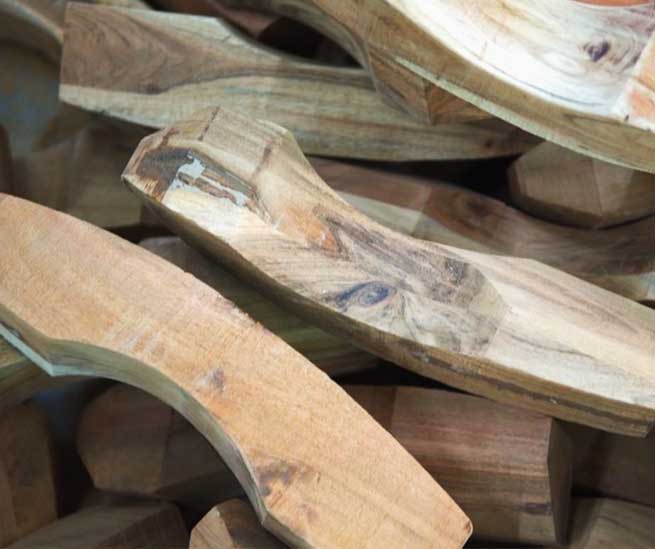
WOOD
Solid Wood | Veneer
METAL
Iron | Cast Iron | Cast Aluminium | Metal Cladding
FINISHES
Fine Finishes | Distressed Finishes | Powder Coating | Antique Finishes
DECORATIVE METALS
Brass | Nickel | Copper Plating
STONE & SURFACES
Marble | Granite | Sandstone
UPHOLSTERY
Fabric | Leather | PU
Quality Control Framework
Timber Selection & Inspection
Timber is inspected and selected for quality, strength and suitability before entering production. Each piece is checked for defects that could affect construction or appearance.
Chemical Treatment & Controlled Seasoning
Timber is chemically treated as specified to help protect against termites and other wood-boring insects, then seasoned under controlled conditions for improved stability and durability. This prepares the wood for consistent performance through production and use.
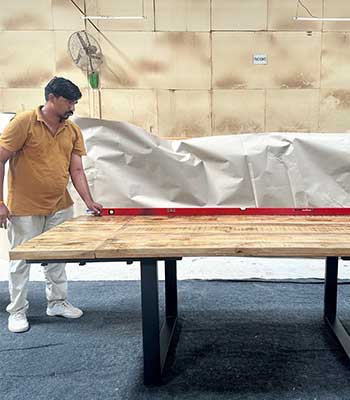
Moisture Content Check
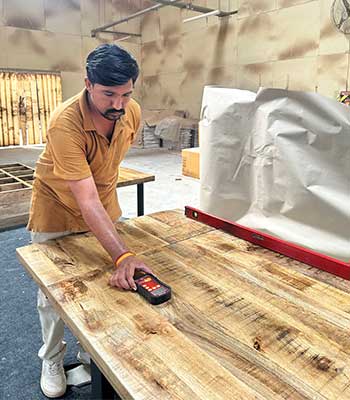
Seasoned timber is tested to ensure moisture levels fall within the required range before manufacturing begins. Correct moisture content helps minimise movement, warping and cracking.
White-Wood Sample Review
The unfinished assembled sample is reviewed for dimensions, construction, joinery and structural accuracy. Any required corrections are resolved before proceeding further.
Finish Panel Review & Approval
The specified finish is developed on a timber panel and approved for colour, texture and sheen. The approved panel is retained as the master reference throughout production.
Packaging Review & Approval
Packaging is developed according to the protection requirements of each product, including supports, corner protection, foam and internal spacing where required. The approved packing method becomes the reference for bulk production.
Pre-Production Review (PPR) & Sign-Off
The complete pre-production sample is reviewed from dimensions and construction through finish, packing and stacking. Once approved and signed off, it is retained as the master reference for bulk production.
Inline White-Wood Inspection
During production, unfinished pieces are inspected for construction, joinery and visible defects such as knots, exposed nails or surface irregularities. Corrections are made before the products move into finishing.
Midline Production Inspection
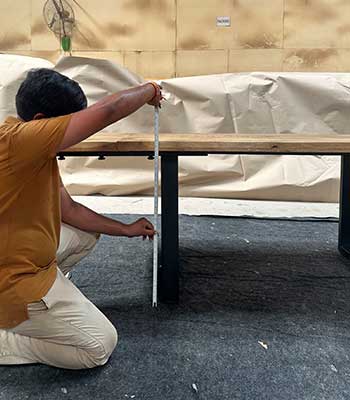
Finished and assembled pieces are checked for construction accuracy, warping, finish consistency and overall workmanship before packing. Any final corrections are completed at this stage, with the product’s net and gross weight also recorded.
Final Product Inspection
Random packed cartons are opened and inspected against the approved PPR standard. Products, hardware, assembly instructions and packing are verified before shipment clearance.
Packing & Drop Test
Approved products are packed according to the established packing specification. Where required, drop tests are conducted to evaluate packaging performance under handling and transit conditions.
Container Stuffing & Loading Check
Packed goods are loaded and arranged securely within the container to optimise space and minimise movement in transit. The loading pattern and quantities are checked before final dispatch.

Sustainability
Our approach to sustainability is reflected in the way we source, manufacture and operate.
- Regenerative Sourcing
Our timber is sourced through farm forestry, where trees are cultivated as a renewable crop and selectively harvested at maturity before being replanted. This cycle of cultivation, harvesting and regeneration provides a responsible, regenerative timber source. - VRIKSH Certified
Responsible timber sourcing and adhering to all legal regulations. - BSCI Certified
Committed to fair working conditions and ethical business practices. - In-House Manufacturing
Allows greater control over material use, quality and manufacturing processes, while ensuring proper waste management. - Respect for Craft
Supporting Indian artisans to help preserve knowledge, techniques and livelihoods that form an important part of India’s furniture-making heritage. - Built for Longevity
Creating durable furniture is a more responsible approach to reducing the need for frequent replacement.
Our Responsibility
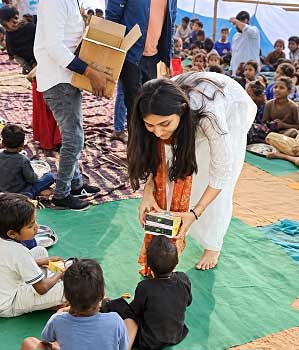
We believe that a business has a responsibility beyond the products it creates. The communities around us are an important part of our journey, and we believe in contributing however we can.
Our social initiatives include:
- Healthcare & Education
Providing free healthcare and educational support to underprivileged children from underserved communities in nearby slums and villages. - Apna Ghar Ashram
Serving as trustees of Apna Ghar Ashram, a residential home for the destitute in Jodhpur. - Community Contributions
Supporting social initiatives through organisations including Rotary Club. - Responsible Employment
We do not employ or encourage child labour and maintain this as a fundamental principle of our organisation.